


The Inward Shift of New Construction?
- Sep 29, 2016
- 3 min read
While there is no doubt I was excited to leave my grey rectangular prism an enter the cavernous, diverse array of brick, mortar, and Corinthian columns, I was nonetheless sad that I was leaving a town that was finally changing after being a stagnant white bowl for 15 years.

Yes, Penn State does have its fair share of cranes and workers arguing about deadlines, at the new Target and H&M going up on Pugh St. But as an "outskirter" to my town of Allentown, PA (about 10 miles west of the NJ border), seeing the pencil-like, non-brutalist offfice towers and the "Strata" apartments go up bolt by bolt gave me an endless movie that was "only" a 1 hour bike ride away from home.
You see, my town has been in the Rust Belt of decline, hammered by the loss of jobs, ranging from manufacturing to healthcare and every possible destination in between the vast, wild ocean. But the arrival of a not-so small hockey arena, despite displacing a Simmons Hall, was no doubt a boon to the downtown's economy. In fact, my high school graduation, the one with the "infamous" walkout, was in this very arena. Thousands of millennial cap and gowns swarmed through the revitalized downtown streets as Hamilton Street was the College Avenue of Allentown. The gleaming golden lights of the Dime restaurant and the National Penn tower gleamed over a mob of red and grey squares eager to spend a night of their lives.
But, all graduates were staged just one block north, at Linden Street, what I consider to be the "Inner City Allentown." A 7-11 backed the street, followed by an endless train of three story row-houses. Just a block down the road, police were handcuffing a potential murderer. Yes, I do enjoy watching some unruly spectacles, but this was too extreme for me.
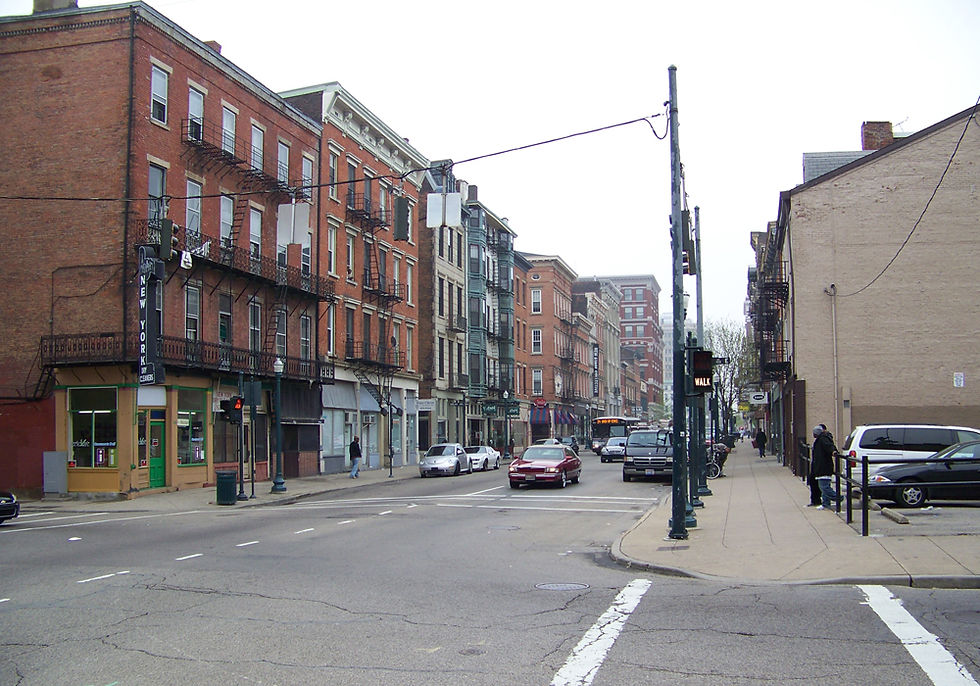
What I am trying to say is that Allentown is only a small subset of a trend that is occurring from coast to coast: gentrification. Certain portions of the city are undergoing landscape surgery to attract a new, younger clientele to its studio offices and eateries. I will call this clientele "millennials."
But just down the road, who are now becoming the "anti-yuppies" are taking shape, with splintered asphalt and mobbed schools weakening both their physical and intellectual foundation. Their well-being to even survive safely is being spared by the focus of development around a certain intersection that happened to be where the hockey arena was located.
For a relationship with Penn State itself, consider the recent renovation of South Halls? There is absolutely no doubt those living in them were at the luck of a draw in terms of quality, as those same resources could have been spent elsewhere. Meanwhile, just across McKean in Pollock, 50 year old towers of cinder-block remain un-renovated and with showers about to end their life-span.
From such an analysis on city planning, a more general decision making strategy can be generated: everything we improve will "deprove" the life of somebody else (think "opportunity cost"). Focusing development in one area, be it Suburbia in the late 20th century or revitalizing downtowns in the last 10 years, left the middle ring, that I live in, untouched, board, and wanting of something new not blocked by that corner store or oak tree.
Resources:
https://upload.wikimedia.org/wikipedia/commons/6/6c/PPL_Center_construction_in_Allentown,_Pennsylvania.jpg
http://thyblackman.com/wp-content/uploads/2013/06/inner-city.jpg
Comments